
This article is sponsored by AmTrust Financial
As America’s workforce continues to age, more and more employees are opting to retire later – and the workers' compensation landscape is having to pivot to suit these new demographics. Once-prevailing misconceptions about older workers are being re-examined as new data surfaces, revealing surprising trends in injury frequency, severity, and recovery outcomes.
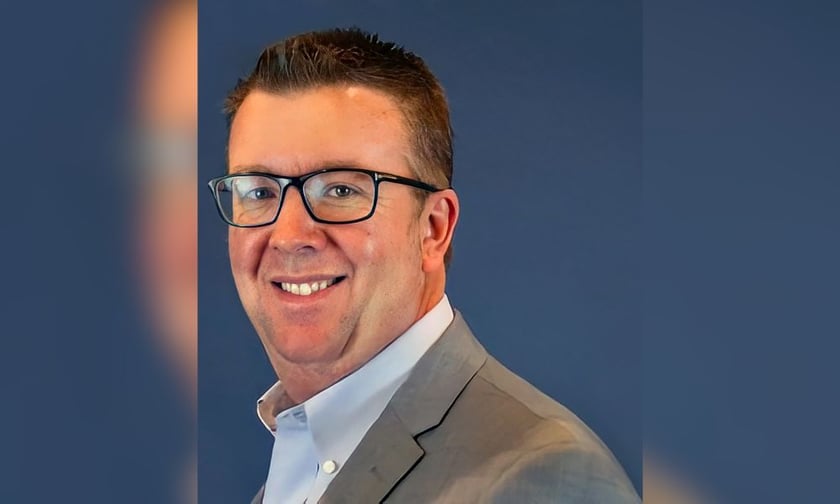
“Historically, the assumptions have been that older workers work more safely, and they’re injured less frequently but when they are injured, those claims tend to be more expensive,” explained Matt Zender (pictured), senior vice president of workers’ compensation strategy at AmTrust Financial.
But that’s changing - and quickly. Not because the risks have disappeared but because the composition and behavior of the workforce are shifting. Data from the National Council on Compensation Insurance (NCCI) found a marked difference in how injury frequency is dropping across age bands – showing that in the 20 to 24 age band, injuries have dropped from 2006 to 2017 by 34%, whereas the above-65 demographic has only dropped by 19%.
“While the assumption that older workers claims are more expensive is true, we've always thought it was because they were injured from an impairment perspective, but that's not the case,” added Zender. “NCCI data shows that the impairment rating for workers under 29 years old is around six percent while the impairment rating for over 65 is around seven percent - so that's about the same. What’s more, we're also seeing that tenure matters, the longer someone’s been working in a job the more likely they are to work safely.”
And this workforce is growing fast. In 1996, the percentage of workers that were 55 or older was only 12%. By 2016 that was 22%. The percentage that was 65 and older was 2.9% in 1996, and in 2026 it is forecast to be 8.6%. That represents a massive increase in older workers over 30 years - and it’s still accelerating. And this demographic shift is already reshaping claims profiles and how brokers do business.
“There are three factors that traditionally have made claims, in some cases, more complicated and on average, more expensive,” Zender explained. “The first is recovery time, the second factor is comorbidities, and lastly it’s wage levels.”
Workers aged 65 and older have significantly longer recovery periods on average than their younger counterparts. Comorbidities typical with aging can also complicate or extend the treatment options. Here, Zender recommends taking stock of all three factors and reverse engineering a solution.
“If recovery time and comorbidities are going to cause claims to be more expensive, what can we do to help to address that? Certainly, a wellness plan would be an example of a strategy to address these factors.” Zender also points to low-cost initiatives like daily stretching programs, rest breaks, and workplace ergonomics that “have been proven to help reduce the incidence of claims.”
Other solutions to consider should involve technology. Technology here, however, can be a double-edged sword. Zender warned brokers that older injured workers may not view tech solutions as assistance - they may view it as frustration. That includes mobile apps and automated claims processing tools that may alienate workers unfamiliar with the platforms - something brokers need to bear in mind in today’s digitally-driven world.
And for smaller businesses the issue becomes even more complex - risks are amplified in firms where every employee represents a larger portion of the workforce.
“When you only have 10 employees, and one of them goes out due to injury, that’s 10% of your workforce that’s not working,” added Zender.
Instead of sidelining seasoned workers post-injury, Zender urges employers to explore modified roles to help these workers return to work. “They may have a great amount of institutional intelligence… They may have deep connections… They may be able to assist in ways that you might not normally consider.”
To help these small businesses adapt, AmTrust redesigned its nurse triage model.
“Traditionally built for larger employers, we made some changes and have created a nurse triage model that’s facilitating to smaller employers,” Zender explained. “We’ve created a process that’s supportive of an unfamiliar demographic… for people who don’t know exactly how to report a claim yet still get the power of that nurse triage - that was a goal of ours. We’ve found that involving a nurse at the very beginning of the claim, when it is first being reported, allows for the appropriate level of care to be administered while also removing some incidents from the system that do not require a doctor’s care.”
But it’s not just models that are changing here, from an underwriting perspective AmTrust is evolving as well.
“Our models always iterate,” Zender explained. “We have claims triage models that make sure the right adjuster is handling the right claim… and underwriting models that provide insights.”
But data alone isn’t enough. Zender emphasizes that brokers need to be storytellers, especially when advocating for clients at renewal.
“If you have a larger claim involving an older worker, but you have an effective wellness plan, you want to make sure that that’s communicated… so that people aren’t connecting dots saying, ‘Well, okay, they’ve had one claim involving a 63-year-old person, so they must be about to have two more.’ Making sure that the full story is told can help remove assumptions from underwriters during their pricing process.”
Looking sector to sector, manual labor industries, such as construction, manufacturing, and wholesale, remain the highest-risk environments, particularly where aging workers must meet physical demands that no longer align with their capabilities.
“Where the intersection between the body’s ability to deliver and what’s being asked of the body don’t always align - when you look at those types of industries, I would say they're the ones that are more at risk,” added Zender.
The response? Sector-specific strategies. In high-risk jobs, that may include robust wellness programming and enhanced return-to-work protocols. In lower-risk office settings, it may mean rethinking ergonomics and offering tech support for older employees struggling with digital systems. And brokers should think beyond comp, too.
“If the older workers are growing as a percentage of the population, that probably also means that the owners of those operations are growing older as well,” Zender pointed out. “You may find yourself in a situation where the owners are now a target market for cyberattacks.”
Aging workers aren’t a short-term trend - they’re a permanent shift in the American labor force. For brokers, that means reassessing how risk is communicated, calculated, and mitigated. For employers, it means adjusting not just their benefits or injury response programs but their mindset.
“There might be more opportunities to have older employees come back in either a part-time or a limited work restriction type of capacity, and still be able to make contributions,” Zender told IB. “Thinking about trying to work differently is a big opportunity.”
Explore other AmTrust Financial resources, insights, multi-line coverage options and more: here.




