
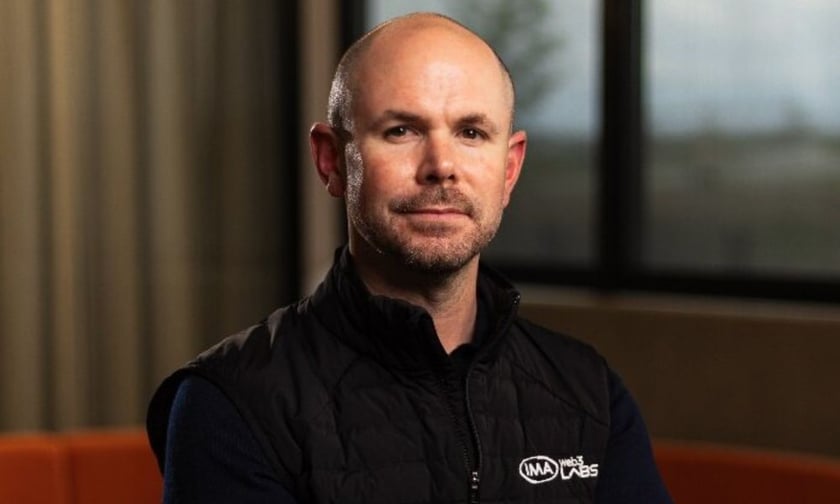
As blockchain, AI, and staking assets outpace regulation, Garrett Droege (pictured) isn’t waiting for the data to catch up – he’s picking up the phone, selling the unsellable, and pushing the industry to innovate or be left behind.
Over the past 15 years, Droege has made a career of transforming skepticism into opportunity – often in markets no-one fully understood. As senior vice president and head of innovation at IMA Financial Group, he’s built insurance products for industries that didn’t exist two decades ago – and he’s still at it.
“The biggest challenge was misconception,” he said. “What the industry was, what the risk profile of this emerging technology was – there was just a lot of misunderstanding.”
In the early days of blockchain and digital assets, Droege often played educator more than broker. He had to coach underwriters on the mechanics of blockchain, explain how its risks diverged from traditional tech, and help them get comfortable enough to insure platforms still under development.
That effort paid off. IMA recently partnered with CoinDesk and Chainproof to launch a staking insurance product for protocols where users earn yield by locking digital assets. “It creates some new exposures that literally don't exist in any other industry,” he said.
But designing the product was only step one. Droege had to translate the risk into terms underwriters could rate and model. “We’re still building new types of products that are fit for purpose, for a new type of risk,” he said.
That same approach is now being applied to AI. “With something like ChatGPT, the risks are still kind of TBD. We don’t actually know,” he said.
The lack of historical loss data makes pricing nearly impossible. “We can guess where the losses might come in, but we don’t actually know,” he said.
That’s why Droege emphasizes communication – helping brokers and risk managers articulate what’s known and unknown well enough to convince underwriters, whether in London or Bermuda, to take the leap. “You need people that can clearly explain what the risks, as far as we know, are.”
It also takes nerve – something he finds lacking in many insurtech ventures. Droege, who helps guide IMA’s investments in the space, has seen startups routinely underestimate the complexity of the insurance ecosystem.
“They don’t fully appreciate how antiquated our industry is,” he said. “The greatest technology isn’t going to just plug and play in our world.”
Internally, his role is part innovator, part translator. He works directly with tech-forward clients to shape policies, then sells the risk to underwriters. “As brokers, our job is to sell your account twice,” he said. “First to the carrier, then to the client.”
Droege doesn’t shy from the “broker” label. “The good brokers actually focus primarily on that first transaction,” he said. “It’s truly me picking up the phone, calling someone and saying, ‘Wait until you see this risk – you’re going to fall out of your chair’.”
But even artful persuasion meets resistance. Innovation creates discomfort, he said, and managing that requires trust.
“If you’ve done a good job as a leader, you’ve gotten the right people on the bus to begin with,” Droege said. “The right people on my bus are not change resistant.”
That trust is crucial when introducing unfamiliar products. Without it, innovation stalls.
“If we’re going to create something new, it’s going to deliver something better for you,” he said. That promise must be clear.
Droege is also rethinking insurance’s sacred cows – like the 12-month contract. Pointing to use cases such as drone insurance, he argued that some risks call for flexible, on-demand coverage.
“I only need the insurance to function when my drone is in the air,” he said.
To Droege, the future of insurance lies in usage-based products and underwriters who are willing to move despite incomplete data. He’s not betting on legacy systems. He’s betting on brave conversations – and a lot of phone calls.




