
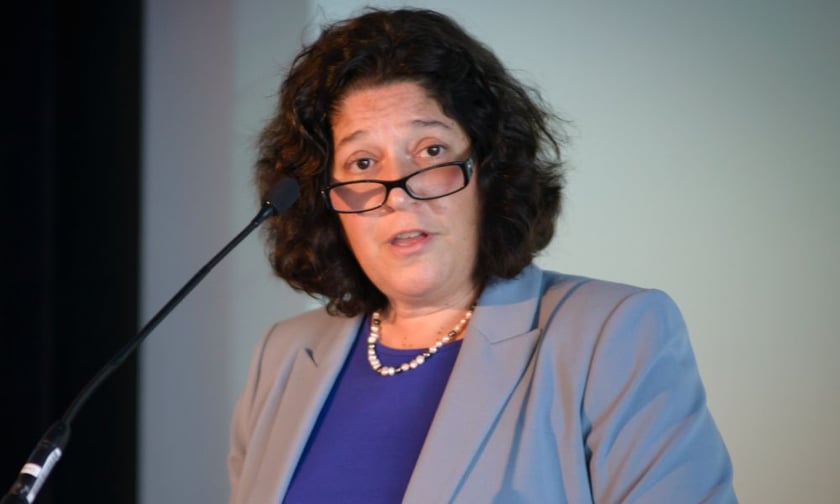
The US Court of Appeals for the Second Circuit has dismissed a First Amendment lawsuit filed by the National Rifle Association (NRA), ruling that former New York Department of Financial Services (NYDFS) Superintendent Maria Vullo (pictured above) is entitled to qualified immunity.
The case stems from actions taken in 2018 against three companies involved in the Carry Guard insurance program. The NYDFS determined that the program, which was promoted in partnership with the NRA, provided gun owners with liability coverage for intentional acts and improperly offered criminal defense coverage for self-defense shootings.
The regulator ordered consent decrees and penalties against the participating insurers and brokers, including Chubb and Lockton.
The dismissal of the NRA’s lawsuit has drawn attention from industry stakeholders, particularly those concerned about how reputational risk is managed by carriers and regulators.
Analysts note that the case may influence how regulators engage with insurers over controversial clients. The legal dispute raised questions about whether regulatory agencies can indirectly discourage business relationships by signaling potential reputational fallout without crossing into overt coercion.
In 2019, the NRA sued former NYDFS Superintendent Maria Vullo, alleging her actions against insurers participating in the Carry Guard program amounted to informal censorship.
In 2022, the Second Circuit ruled in Vullo’s favor, citing qualified immunity. The NRA appealed, and in 2023, the US Supreme Court agreed to hear whether a regulator violates the First Amendment by pressuring third parties to cut ties with a controversial group due to personal or public disapproval.
The Supreme Court found the NRA had raised a plausible First Amendment claim and sent the case back to the Second Circuit, which reviewed only the immunity issue. The court held that at the time of Vullo’s conduct, no precedent clearly established that pressuring parties over nonexpressive activities like underwriting violated the First Amendment. Qualified immunity applies unless an official would have known the conduct was clearly unlawful.
While a later district court ruling supported the NRA’s position, it came after Vullo’s actions. The Second Circuit said prior case law only addressed coercion tied to expressive conduct, such as speech or publishing.
On July 24, the NRA asked for an additional 30 days to consider requesting a rehearing, citing the case’s complexity and ongoing related litigation in district courts.
The broader litigation landscape also reflects the growing impact of third-party litigation funding (TPLF), which continues to alter risk and cost dynamics for insurers. TPLF has been cited by industry associations as contributing to longer case durations and encouraging more aggressive legal strategies, increasing pressure on liability insurance pricing.
In cases involving constitutional claims or advocacy groups, the presence of litigation funders may further complicate defense cost projections.
The Council of Insurance Agents & Brokers (CIAB) has previously warned that increased litigation costs driven by TPLF activity are contributing to elevated premiums in several commercial lines, especially where reputational or regulatory factors intersect.
Brokers have pointed to reduced availability in certain affinity group programs and specialty liability coverages, often triggered by external legal and political risk considerations.
The NRA litigation has also underscored industry concern over how far regulators can go in using informal guidance or public statements to influence market participants. Legal experts say the outcome may have a chilling effect on regulatory efforts that rely on reputational risk to steer carrier behavior, particularly where no clear violation of law exists.
The court’s focus on coercion and qualified immunity could recalibrate how future regulatory interventions are framed.
What are your thoughts on this story? Please feel free to share your comments below.





