
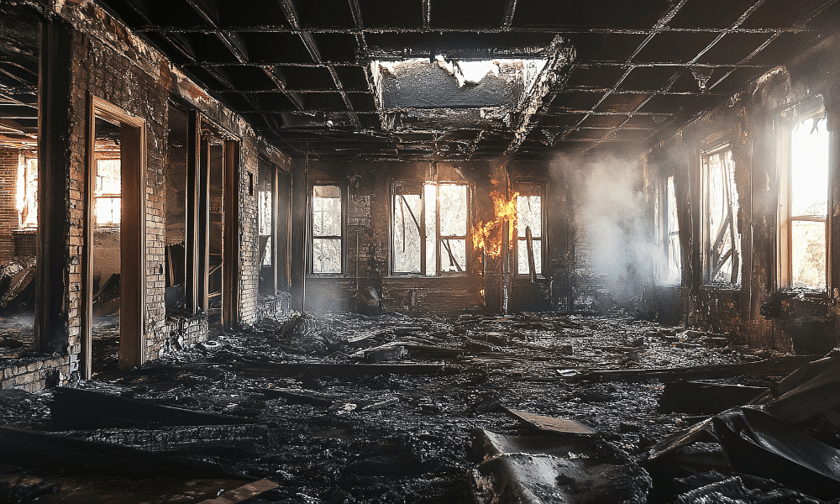
A federal appeals court has sided with an insurer in a high-stakes coverage dispute after a Minnesota bar was destroyed in an arson fire.
On July 22, 2025, the Eighth Circuit Court of Appeals affirmed Illinois Casualty Company’s decision to deny coverage for a fire that gutted The Press Bar and Parlor in St. Cloud. The case turned on whether the bar’s corporate owners could collect on the insurance policy when one of their own officers - who controlled both the business and the property - admitted to setting the blaze.
The fire happened on February 17, 2020. At the time, the bar’s operations were run by Timeless Bar, Inc., while the real estate was owned by Horseshoe Club, LLC. Both companies were owned by Andrew and Jessie Welsh, who had divorced just a few months earlier in November 2019. Illinois Casualty insured the bar through a business owner’s policy that named Timeless Bar as the insured and listed Horseshoe Club as an additional insured. Neither Andrew nor Jessie was individually named on the policy.
After the fire, Timeless Bar and Horseshoe Club submitted a proof of loss to Illinois Casualty totaling about $1.96 million. Andrew and Jessie both signed the document, declaring that the fire’s cause was unknown and denying any involvement by the insured. A subsequent law enforcement investigation concluded that Andrew had intentionally set the fire, and he later pleaded guilty to arson.
Illinois Casualty denied the claim, pointing to three provisions in the policy: the Concealment, Misrepresentation or Fraud clause, the Dishonesty Exclusion, and the Intentional Acts Exclusion. The fraud clause, central to the dispute, provided that coverage would not apply if the insured or an “authorized representative” concealed or misrepresented any material fact either before or after a loss with intent to defraud.
The companies, along with Jessie, sued the insurer, arguing that Jessie was an innocent party and that Minnesota’s statutory protections for “innocent co-insureds” should extend to the entities themselves. The district court dismissed Jessie’s claims because she was not named as an insured and granted summary judgment for Illinois Casualty, holding that Andrew’s actions were attributable to the businesses he controlled.
In its decision affirming the lower court, the appellate panel agreed. It ruled that Minnesota law does not apply the innocent co-insured doctrine to corporations or limited liability companies. Because businesses act through their officers, the court said, misconduct committed by those in control binds the entity itself. The judges also made clear that any change to this rule would have to come from the state legislature, not the courts.
The ruling underscores for insurers and business owners that when a company officer’s fraud or criminal act leads to a loss, coverage can be denied - even if other owners were uninvolved.





