
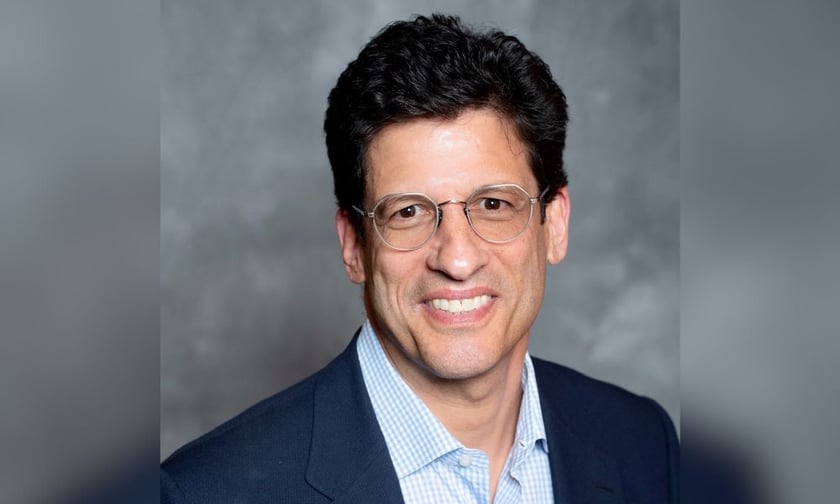
Amid rising property losses and aging infrastructure, residential condo associations have become one of the most complex – and often misunderstood – segments in commercial insurance. Brian Cohen (pictured), CEO of Arden Insurance Services, says many carriers simply don’t want the exposure.
"The residential condo association market is unique, and it has been unique for a very long time," Cohen said. These multifamily structures rely on legal entities to manage common property, making every policy a hybrid of personal, commercial, and community risk. For most underwriters, he says, that’s a nonstarter.
Many carriers have backed away from this space after poor experiences or adverse selection. “Some insurers have always hated this line of business because they find it very, very complicated,” Cohen said.
The numbers alone can be daunting. “You take one building at a TIV of $5 million, then multiply it by 30 buildings for total TIV of $150 million, and all of a sudden you have a really big number,” he said.
Yet Arden sees opportunity where others see only exposure. By focusing on this space, the firm has built deep underwriting expertise and operational alignment. “Everyone in our company are condo association experts," Cohen said. That focus enables the team to navigate the subtle but crucial dynamics between board members and property managers – relationships that often dictate how risk is managed on-site.
Insurability often hinges on how well a building is maintained – not when it was built. Cohen emphasized the difference between actual age and “effective age.”
"They might have been built in the 1970s, but because the association has been good throughout its history and it's maintained its premises, it might have the characteristics of a risk from the late nineties," he said.
That’s where brokers and program managers can play a role: educating condo boards on how deferred maintenance drives up premiums. "Why are you going to raise my monthly assessment? Why do we need to replace the roof?" Cohen said, quoting the kind of pushback associations often give. But neglect translates directly into higher risk – and less capacity.
Remote underwriting is no longer a limitation. Arden leverages third-party data and imagery to conduct detailed assessments across geographies. “Our underwriters are based all over the country, and they can be sitting in Los Angeles and evaluating a risk in Chicago,” Cohen said.
Advanced imagery tools also allow for loss prevention at scale. "You can get as granular as being able to look on a roof and see if it has had pre-existing wind hail damage," he said. This capability helps insurers avoid disputes, refine pricing, or decline risks outright before bind.
One area where Cohen sees positive momentum is regulation – specifically, mandated reserve studies. These reports provide a financial blueprint for how associations plan and fund capital repairs. “I love the states that mandate reserve studies. And by the way, they're doing a benefit for the condo associations," he said.
He referenced the 2021 Surfside, Florida, condo collapse – in which 98 people were killed – as a tragic example of regulatory failure. “There was no regulation of what a condo association could and could not do, and so what did that condo association decide to do? They basically decided not to update anything,” he said.
By contrast, California and other jurisdictions require third-party reserve studies to inform budgeting, which gives insurers greater confidence. “You have to have a reserve study, and you have to have a reserve study that's opined on by a third party company,” Cohen said.
For brokers, MGAs, and wholesalers looking to place condo association risks, specialization matters. Arden’s model – narrow focus, underwriting discipline, and smart tech – shows what it takes to succeed in this space.
“We are condo association experts,” Cohen said. “Everyone in our company spends every day focused on residential condo associations.” In a segment where the wrong risk can sink a program, that level of clarity may be the most important coverage of all.




