
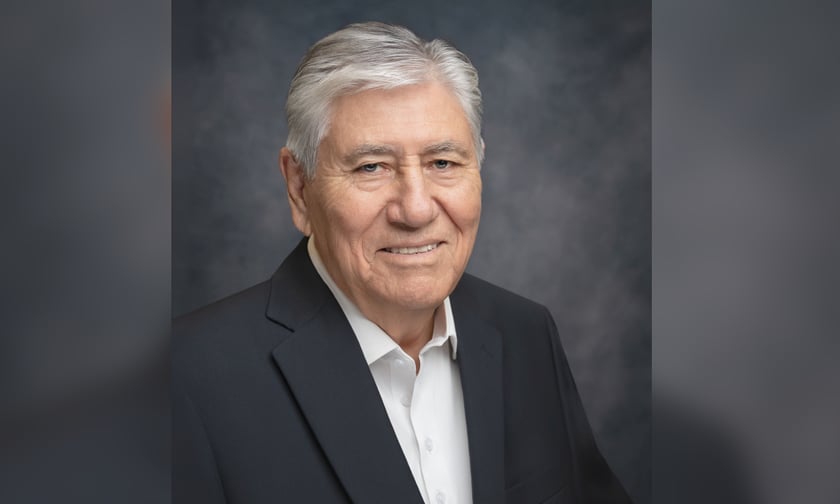
“You can have the broadest knowledge in insurance,” said Manuel Juarez (pictured), CEO of TEXCAZ Insurance Services, “but if you don’t take into account firsthand the social, business culture, and the customs and the regulations in the country, you get into trouble very quickly.”
It’s a reminder that continues to resonate across an industry navigating the complex terrain of global, multinational, and multi-domestic strategies. According to Juarez, a clear understanding of those distinctions remains elusive for many insurers – particularly those expanding from the US – who may underestimate the need for deep local engagement.
“A lot of us don’t get it right,” said Juarez. “Because it is very different from global and international insurance.” A multi-domestic model, he emphasized, is not a localized version of a global product – it’s a purpose-built approach for each distinct market.
Success hinges on more than regulatory compliance. “Each approach has to be different, depending on the countries and the markets that you’re going to, and their regulations and their economies, and their cultures,” Juarez said.
While past expansion models often leaned on expatriate leadership, today’s realities call for a new playbook. “American companies used to send Americans to run their businesses in countries in Latin America and Asia Pacific,” he said. “The British and the Japanese, they all did the same. But now, these countries have developed their own deep talent pools.”
For Juarez, that shift should inspire insurers to rethink how they structure local operations. Relying solely on central oversight, he warned, risks missing critical in-market dynamics that can make or break a business.
Product adaptation and compliance remain core functions – but they aren’t sufficient on their own. “The greatest challenge is to understand the culture that you’re dealing with and the regulations of the market that you’re dealing with,” Juarez said. Without cultural fluency, insurers may misread everything from consumer behavior to regulatory interpretation.
Too often, strategies fall short because firms either move too fast or hesitate too long. “Some people jump in with both feet without testing the depth of the water. Others just dip a toe,” he said. The key is thoughtful balance, built on research, strong local partnerships, and an operational model designed for divergence – not just scale.
The stakes are even higher within trade zones like USMCA, which links the US, Mexico, and Canada in the world’s largest trade bloc. “It includes the three countries that have the largest percentage of international trade in the world,” said Juarez.
Insurance tied to cross-border logistics – particularly trucking – requires sharp coordination across jurisdictions. “Approximately 80% of the USMCA activity is done by truck,” he said. “A little bit is done by rail, even less by sea.” Missteps in one country can create ripple effects across the entire trade corridor.
USMCA also magnifies the broader economic role of insurance. “It’s very important for our economy – not just for the trucking industry, but for jobs in the United States,” Juarez said. “A significant percentage of jobs are related directly to USMCA.”
Across all regions, Juarez’s message remains focused: local depth is non-negotiable. Insurers that try to overlay a global model without local investment are likely to face setbacks. “There’s got to be an understanding that you can’t just jump into something without really having the expertise and the research behind it,” he said.
While the technical mechanics of insurance can be scaled, cultural and political insights cannot. Firms that embrace market-specific strategies – through staffing, governance, and product design – stand the best chance of sustained success.
“Insurers who recognize that each market deserves its own blueprint will be the ones who thrive,” Juarez said.





