
As medical claim costs climb, a growing number of employers are turning to single-parent captives to take back control of their risk – and their budgets.
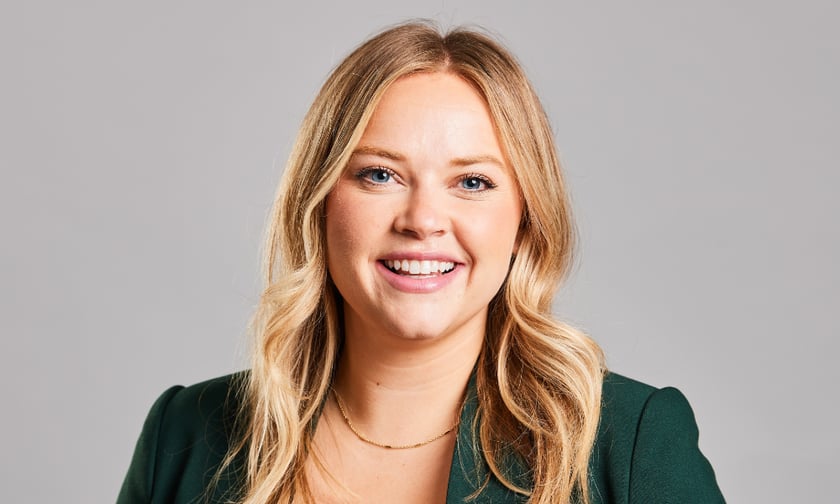
“Captives give organizations the most amount of flexibility and control that they can have over their overall insurance program,” said Blair Garland (pictured), captive practice leader at Graham Company, a Marsh McLennan Agency company.
Traditional insurance often locks employers into opaque pricing structures and rising premiums. Captives offer a counterpoint by bringing transparency to what’s actually driving costs. “Knowing what cost components go into their premium dollars that their medical stop-loss carriers are asking of them to pay, and why,” said Garland, has become increasingly valuable.
Instead of transferring all costs to a carrier, some employers choose to retain predictable portions of their medical claims in-house – often the first $150,000 per claim. With actuarial support, they can more accurately forecast those costs while trimming out carrier expense and profit. Garland says she encourages clients to “retain that [cost] versus giving that money to an insurance carrier... that may be a higher [cost] than what it could be,” if the client were to retain the risk themselves.
Captive strategies often deliver the greatest value in industries with higher hazard exposure – like transportation, construction, or logistics – yet myths around risk continue to slow adoption.
“Sometimes we see those higher hazard companies…thinking, ‘I don’t want to be fully self-insured,’” Garland said. Many assume captives equate to being self-insured, but that’s not the case. “We can structure their risk appetite [so that]... instead of them taking on a full million dollars of a loss, maybe they’re only taking on the first $300,000 of that risk.”
That manageable layer can often be further reduced through proactive safety measures, such as better hiring practices or preventative technologies. In the transportation industry, for example, Garland cited in-cab camera systems that detect hard braking before an accident occurs. “Let’s get in front of that, show them some more defensive driving,” she said.
Modern captives are no longer spreadsheet-bound. Advances in data, AI and real-time analytics are transforming how employers oversee and mitigate risk.
“One of the key components that I see here is taking this data and being able to spend less time on the analysis portion... and more time in terms of what are the actionable insights,” said Garland.
She pointed to a client that discovered higher claims at its Bronx facility compared to Philadelphia. A deeper analysis showed the spike came from employees with over five years’ tenure. “Is there a drop-off of safety practices or training that need to be re-engaged?” she said.
Fewer claims – both in frequency and severity – strengthen the captive’s financials. “Less claims mean you’re paying less money out,” Garland said. “That gives the organization more flexibility... to leverage their captive for other risk exposures.”
Graham Company integrates captives into a proprietary planning framework that helps employers align benefits with workforce and financial goals.
“Prepare and plan. This [stage] is your benchmarking,” Garland said. That stage is followed by “Recruit and retain... innovate... and manage cost and risk,” she said, describing the process. The final stage – educate and engage – focuses on ensuring employees understand their benefits and what’s available to them.
Instead of offering off-the-shelf solutions, this process works backward from workforce needs to design a customized structure. Then, Garland said, “we’re able to slice and dice that into [recommendations] – this is what you should retain in your captive versus maybe utilizing a third-party insurance carrier.”
As market conditions harden across multiple lines – including excess and property – interest in captives continues to rise.
“The need and the interest has continually gone up every year,” said Garland. She pointed to a client who joined a group captive and cut their excess costs nearly in half. “That was a huge advantage... because the underlying insurance costs were controlled.”
That structure also enabled the captive to offer higher limits, which helped secure more competitive pricing from excess carriers.
Ultimately, Garland said, it comes down to control. She likened it to being a parent without a car, relying on others to get the kids to practice. “That’s a lot of anxiety and planning around that.”
Owning a captive, she said, is like having your own vehicle. “You can go, and you can take them whenever it’s most convenient for you... You have that control.”
As medical and insurance costs continue to climb, more companies are deciding it’s time to stop waiting on a ride – and start driving their own risk strategy.





