
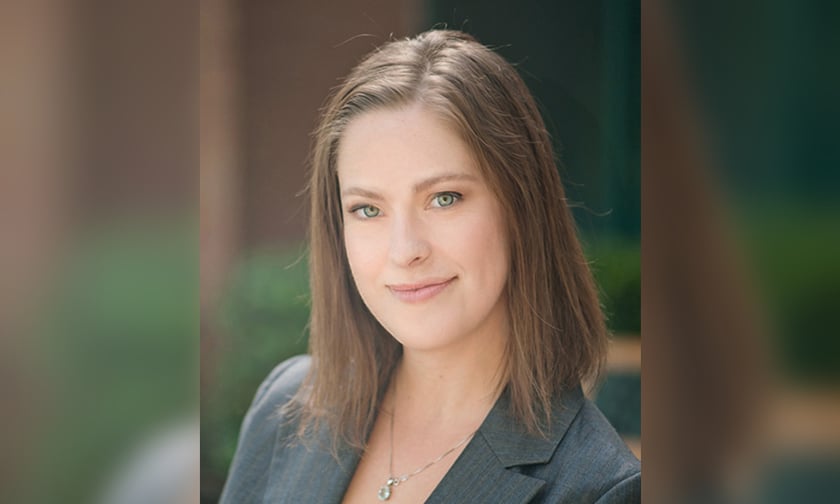
The traditional methods of managing construction risk are struggling to keep pace with today’s realities. According to Rachel Dobbs (pictured), client executive at Hylant, construction projects now involve higher stakes, more players, and greater complexity. “We’re seeing a lot more complex projects, for sure,” she said. Joint ventures and public-private partnerships are increasingly common, changing how risk is insured and transferred.
That complexity is reshaping coverage placement. “Rather than having the traditional towers, where every contractor on a project has their own guaranteed cost program, instead, we’re seeing a lot more CIPs – the owner-controlled and contractor-controlled insurance programs,” Dobbs said. These centralized insurance programs offer consistent coverage across all contractors, reducing one of the industry’s persistent challenges: gaps and overlaps.
In Florida, that consistency is critical. The state’s residential construction market is fraught with what Dobbs described as a “wild west of residential exclusions.” Definitions vary across housing types, and underwriters treat them differently. “If you're an owner with that type of project... it is extremely hard under traditional structures to make sure that residential coverage applies all the way down that stream,” she said. Even smaller projects are turning to CIPs to ensure coverage continuity.
While centralized programs may offer savings, Dobbs emphasized their primary benefit. “The biggest concern is just coverage continuity,” she said.
Another growing issue is supply chain disruption, particularly when it comes to manufacturing equipment. As US manufacturing investments rise, specialized machinery sourced from overseas is increasingly essential. If damaged or delayed, these shipments can derail project timelines – yet many builders’ risk policies don't account for that.
“So we’ve seen this evolution of a project cargo policy, which includes delay in completion coverage,” said Dobbs. These supplemental policies are becoming more common to address risks standard policies overlook. “The nuance of what goes into a project is really being kind of pulled apart,” she said.
Standard contractual protections aren’t always enough. Dobbs recommended that contractors consult brokers before signing contracts. “Attorneys may not know the latest when it comes to insurance and indemnity clauses,” she said. “Agents are already paid. We’re cheaper than your agent because you’ve already paid us.”
One critical area is builder’s risk deductibles. If an owner places a policy with a high deductible, contractors can be on the hook for the full amount. “So we’ll build into the contract language a limitation of liability on builder’s risk deductible,” said Dobbs. That cap might be $25,000, even if the actual deductible is $1 million.
Dobbs also cautioned against unrealistic insurance requirements. “I had a large municipality owner that was requiring from a contractor a hold-harmless endorsement on their general liability policy,” she said. “Well, that doesn’t exist.” Clarifying these issues early can prevent compliance problems down the line.
While indemnity clauses and additional insured provisions are key tools, they have limits. “Sometimes things happen on a project, and it’s way too involved, way too expensive to determine fault,” she said. In those situations, builder’s risk – a no-fault, all-risk coverage – can be more effective in keeping work on track.
Environmental coverage is also narrowing. “PFAS exclusions are now pretty ubiquitous,” Dobbs said. In humid states like Florida, fungus and mold exclusions are also common. Coverage availability increasingly depends on location and project type.
“For me, to get mold coverage on a remediation contractor is, it’s tough,” she said. The key is working with brokers who can tailor manuscript policies. “Make sure that you are working with a professional on that side,” Dobbs said. “They can say, this is possible, this is good, we can get this cheap, this will cost a ton.”
Dobbs also pointed to a surge in cyberattacks. “In the last 12 months, I’ve had five large contractors, all of whom have had cyber incidents,” she said. Most involved invoice manipulation, where payment instructions were altered and funds diverted.
“You don’t typically find out about those claims until 30 days later,” she said. “That money is long gone at that point.” Others involved spoofed emails instructing unauthorized payments.
One case was particularly severe. “They infiltrated one company phone out of the entire company, which, of course, was the CFO’s phone,” Dobbs said. “All of his banking systems – he was locked out of.” The targeted ransomware attack aimed to force payment through strategic access.
A cyber policy, Dobbs noted, offers more than reimbursement. “You’re purchasing a suite of vendors and breach coaches to walk you through that process,” she said. Most firms are unprepared to handle a ransomware event on their own.
In today’s risk environment, what clients expect from their brokers has shifted. “It’s not just, I need to buy an insurance policy,” Dobbs said. “It’s, I need an advisor to tell me what I need to buy.”
That advisory demand is spurring broader structural changes. “About 50% of that population group has moved to captive programs,” Dobbs said. Top-performing contractors are exiting the traditional market, concentrating risk among the remainder and pushing up rates. “The best performing are in a captive program where their rates are going down year over year,” she said.
The advantages are cumulative: lower premiums, streamlined administration, and stronger margins. “It makes them able to get more jobs, be more profitable, and continue growing at a faster pace than those in the traditional insurance marketplace,” Dobbs said.
As construction risks evolve, so too must the strategies to manage them. From centralized coverage to cyber readiness and captive structures, the insurance conversation is no longer about policies alone – it’s about partnership and foresight.





