
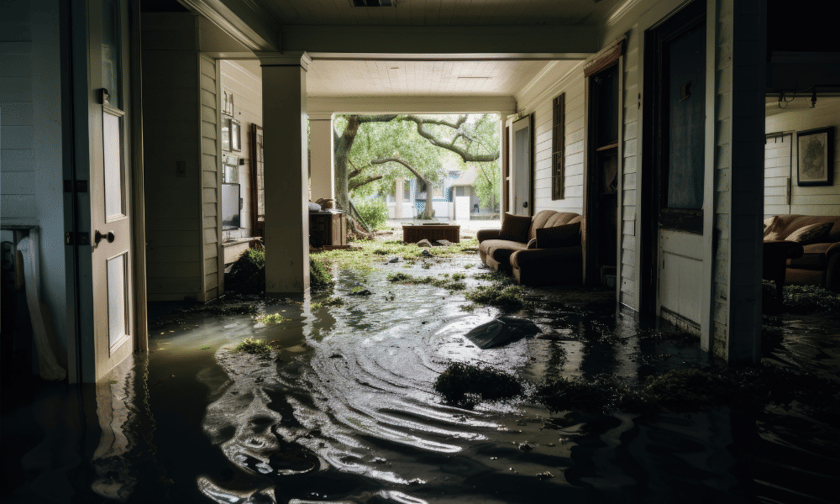
Texas insurers are once again in the eye of a storm—both literally and figuratively. Following catastrophic flooding that tore through Central Texas over the weekend, the state’s insurance sector faces renewed pressure to adapt to a future of intensifying, unrelenting weather risk.
“We're used to these weather events,” said Albert Betts, Executive Director of the Insurance Council of Texas. “Sadly, it's not unique or surprising when it happens.”
This time, the deluge has triggered not just claims, but questions—about forecasting failures, emergency response coordination, and the wider strain on systems meant to protect communities. Key roles at local National Weather Service offices were reportedly vacant when the storm escalated late Thursday into Friday. Some Texas officials blamed the agency’s forecasts for underestimating the rainfall. But former NWS staff countered that the real issue was a shortage of seasoned professionals who typically serve as vital communication liaisons between forecasters and local emergency management.
To insurers, the signals are crystal clear. As Betts puts it, “We can’t control the weather. If we could, that’d be great. But we can’t. What we can do is build better—and prepare smarter.”
The Central Texas floods—which dumped unprecedented volumes of water and overwhelmed emergency systems—have once again highlighted the urgency for insurers to recalibrate. Hailstorms, hurricanes, wildfires, and floods are no longer episodic outliers—they’re business as usual.
“Dallas-Fort Worth is routinely hit by hail and tornadoes. Last year, it was a wind event in Houston. This time, it’s flooding in the Hill Country,” Betts said. “Insurers are learning to adapt or risk losing their footing.”
Adaptation now means rethinking everything: underwriting strategies, exposure maps, coverage design, and deductibles. Carriers are also leaning harder on the Texas Windstorm Insurance Association (TWIA), which writes nearly half of the wind and hail policies along the Gulf Coast, with private insurers covering the rest—minus wind and hail.
Despite the mounting losses, Texas hasn’t seen the kind of insurer retreat that has crippled markets in Florida, California, or Louisiana. “Capacity is holding,” Betts stressed. “We’re not seeing companies uniformly pull out. In fact, 10 to 11 new P&C carriers entered the Texas market in the past year alone.”
While much public attention has focused on weather volatility, Betts warns that political decision-making can be just as disruptive to market health. “It may sound good to say, ‘I lowered your rate,’ but the unintended consequence is that companies pack up and leave. That’s what we’ve seen in other states,” he said.
Betts was also quick to challenge assumptions about the state’s regulatory model. “Texas isn’t deregulated. We have a file-and-use system. Rates must be actuarially justified, non-discriminatory, and are subject to challenge. The Department of Insurance has teeth.”
But even sound regulation can’t fill the gaps left by inadequate mitigation efforts. Texas still lacks a statewide post-disaster contractor law—leaving homeowners vulnerable to fraud—and failed last session to pass legislation that would subsidize roof retrofits, a move that other states like Alabama and Oklahoma have implemented with measurable success.
“The roof is the most expensive part of the home after a storm. We need to do more to make those rebuilds smarter—not just cheaper,” Betts said.
Insurers are aggressively leveraging technology—from AI-powered pricing models to automated claims triage—to stay competitive in a fast-moving market. But tech isn’t a silver bullet. It requires oversight, especially when it comes to concerns about algorithmic bias. “Companies are trying to use tech to price better and serve faster,” Betts said. “But those systems are being watched closely to make sure they don’t discriminate.”
Meanwhile, the weekend’s flooding has revealed a more basic infrastructure vulnerability: people. The NWS staffing shortfalls didn’t just mean less precise modeling—they left critical gaps in coordination. Without experienced forecasters guiding emergency managers in real-time, even the best forecasts can fall flat.
“Insurers can model exposure down to the square foot,” said Betts. “But when the infrastructure around us cracks—whether it’s roads, roofs, or response teams—the losses ripple out in ways no underwriter can completely anticipate.”
For Texas insurers, the path forward will require more than rate recalibrations or underwriting shifts. It will require leadership—at the company, state, and regulatory levels.
“We need regulators who understand that protecting consumers and keeping a solvent market are not mutually exclusive,” Betts said. “We need lawmakers who prioritize long-term resilience over short-term wins. And we need insurers who stay agile, innovative, and committed to writing in one of the most complex markets in the world.”
Because in Texas, the storms aren’t slowing down. And no one—not even the best underwriter—can control the weather.





