
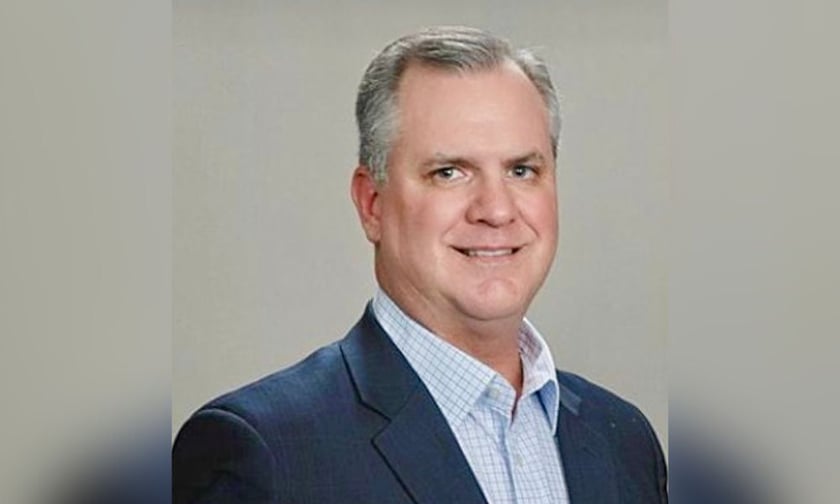
In a market where a single racehorse can command millions, underwriting bloodstock insurance is more than assessing numbers – it’s a nuanced balance of valuation, veterinary science, and industry know-how. Jason Collier (pictured), executive vice president of equine and bloodstock at DUAL North America, has seen firsthand how emotion and legacy shape the economics of this rarefied sector.
The global bloodstock market sees an estimated US $2.5-$3 billion traded annually through top-tier auctions, according to industry analysts. Meanwhile, the global horse insurance market was valued at $580 million in 2023 and is projected to reach $1.77 billion by 2033, driven by increased valuations and specialized coverage demands, according to a report by Future Market Insights.
“Especially with high-value racehorses, a lot of their value is determined at public auctions,” said Collier. “The purchase price is what it is – that becomes the insurable value. But once they start performing, winning Graded Stake Races, it becomes a question of what the market will bear.”
In such a niche domain, DUAL often hires underwriters based on equine expertise rather than insurance credentials. “We look for people who maybe don’t have insurance experience but do have equine experience,” Collier said. “People who’ve grown up riding or worked in the industry. In this field, the subject matter expertise comes first.”
It’s a small circle. Only a limited number of carriers in the US offer equine mortality programs, and just a few dominate market share. “Most companies will only take a $2 million line on any one animal,” Collier said. “So, for horses worth $5 million, $10 million, or more, that risk needs to be split across multiple insurers. We’re all friendly competitors in that space.”
While the fundamentals of the bloodstock market have held steady, certain shifts are introducing new complexities. Advances in breeding – particularly among quarter horses – are altering the valuation landscape. Techniques like embryo transfer and artificial insemination allow a single pairing to produce multiple genetically identical foals in one season.
“That’s a tricky spot for us,” Collier said. “You’re seeing market saturation with genetically identical offspring. They can’t all be worth the same - and they’re not all going to be the same quality.”
At the same time, some horse farms are turning to agritourism, welcoming public tours and events. While that helps promote the sport, it introduces new liability exposures.
“Many of these farms were once private, but now they’re regular stops on horse farm tours,” he said. “It’s a risk if a horse gets loose and hurts someone – or itself. Mortality coverage doesn’t extend to public liability, but it’s something we monitor closely.”
Though equine mortality insurance has long-standing roots, carriers are introducing incremental changes in response to evolving demands. DUAL, for instance, has expanded colic surgery limits and refined major medical offerings for sport horses.
“Vet costs have skyrocketed, so we’re always adjusting what $10,000 in coverage actually gets a client today,” Collier said. “In the sport horse world, major medical is often the reason they buy insurance in the first place.”
Yet misunderstandings persist – particularly around exclusions and pre-existing conditions. “Clients might submit a clean health statement, but our claims team will review historical medical records and sometimes find issues that weren’t disclosed,” he said. “That’s frustrating for everyone.”
For brokers, clarity remains critical. “Be thorough,” Collier said. “Make sure your client fully understands what’s covered and what’s not. It’s called major medical for a reason – not every sniffle is covered.”
As bloodstock values rise and client demands grow, insurers are under pressure to stay agile without relaxing standards. “We’re all taking a chance when we insure these animals,” said Collier. “But our job is to price risk based on knowledge – and that means knowing both the industry and the animals.”
For brokers operating in this emotionally charged space, trust and technical literacy are essential. And for insurers like DUAL, maintaining a foothold means marrying deep equine insight with underwriting discipline – ensuring resilience in a market where heritage and high stakes go hand in hand.





