
In a forceful rebuke of America’s increasingly commercialized litigation environment, Evan Greenberg, CEO of Chubb, and John Doyle, CEO of Marsh McLennan, have joined forces to call for sweeping reforms to rein in the multi-billion-dollar litigation finance industry. Their pointed commentary - published in The Wall Street Journal - warns that the surge in third-party litigation funding (TPLF) is driving an explosion in high-dollar jury verdicts, distorting the justice system, and quietly fueling economic inflation.
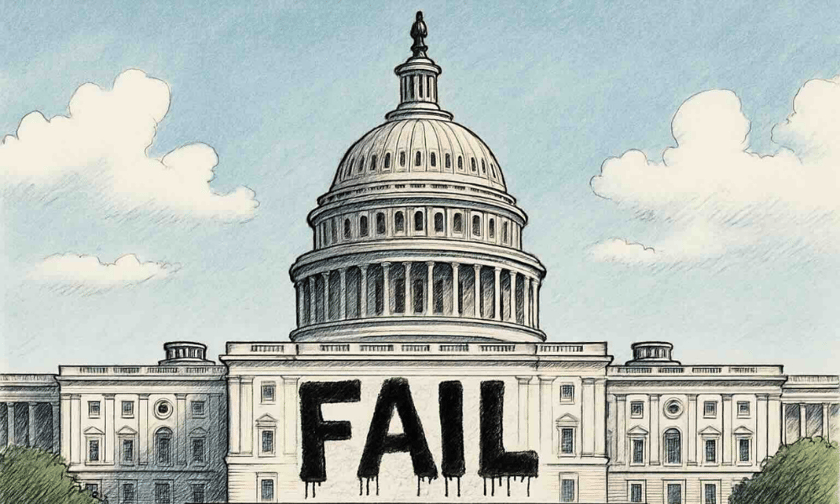
But buried beneath their critique is a broader frustration: Congress had a chance to act - and failed.
At the heart of Greenberg and Doyle’s concern is the collapse of a proposed tax provision in President Donald Trump’s so-called “Big Beautiful Bill” - the 2020 budget reconciliation package. The bill originally included a measure to tax income derived from litigation finance agreements at 40.8%, aligning the tax burden of institutional funders with that of ordinary plaintiffs. While the provision passed the House of Representatives, it was stripped from the final legislation after the Senate Parliamentarian ruled it violated the Byrd Rule, which bars non-budgetary items from reconciliation bills.
Greenberg and Doyle called the episode a “missed opportunity”, and one that allowed litigation funders - many of them hedge funds or foreign entities - to retain the favorable tax treatment of capital gains, sometimes paying as little as 0% in US taxes, while plaintiffs pay as much as 37% on theirs.
Litigation finance has become a multibillion-dollar global industry, with funders injecting capital into tort cases in exchange for a cut of the settlement or jury award. Proponents argue the practice helps plaintiffs pursue legitimate claims they might otherwise abandon. But critics like Greenberg and Doyle say it has metastasized into a shadow market that incentivizes excessive litigation, prolongs cases, and pressures defendants into inflated settlements.
“Outside money has turned injury action into an investment scheme that treats individual misfortunes like penny stocks or subprime mortgage investments,” the CEOs wrote.
Their concern is not theoretical. In 2024, there were 135 jury verdicts exceeding $10 million - so-called nuclear verdicts - representing a 52% year-over-year increase, according to Marathon Strategies. Forty-nine of those awards exceeded $100 million, and five surpassed the billion-dollar mark.
The average nuclear verdict in 2024 stood at $51 million, up from $21 million a decade earlier. Total damages awarded in just one year exceeded $31.3 billion, and industry leaders say the influence of third-party financiers - many of whom operate behind opaque legal arrangements - cannot be overstated.
The Numbers Behind the Trend
|
Year |
# Nuclear Verdicts |
Total Awarded |
Median Verdict |
Verdicts > $100M |
|
2013–2022 |
1,288 |
— |
$21 million |
115 (cumulative) |
|
2023 |
89 |
$14.5 billion |
$44 million |
27 |
|
2024 |
135 |
$31.3 billion |
$51 million |
49 (5 > $1B) |
The downstream effects of inflated litigation are rippling through the economy. “Common commercial auto accidents that once led to $1 million jury awards now routinely produce awards of $10 million and can go as high as $100 million,” Greenberg and Doyle noted.
That inflation is passed along to insurers, then to policyholders, then to consumers. Truckers pay higher insurance premiums, households pay more for transported goods, and small businesses are left struggling with rising operating costs. The US Chamber of Commerce estimates that tort litigation imposes a $529 billion annual tax on economic activity, equating to roughly $4,207 per American household.
According to the Insurance Information Institute (Triple-I) and Munich Re US, litigation-related expenses add $6,664 in costs for a family of four each year and are growing at 7% annually, outpacing GDP and core inflation.
|
Period/Year |
Case Types Dominating |
Leading States (by verdict count or $) |
|
2013–2022 |
Product (23%), Auto (23%), Medical (20%) |
CA (199), FL (197), NY, TX, PA, IL, GA, WA, MO, OH |
|
2023 |
Medical rises to ~30% |
GA saw record levels; strong in CA, PA, Cook Co IL |
|
2024 |
Product & IP dominate in corp suits |
CA ($6.9 B), NV ($8.5 B spike), PA, TX, NY |
In response, insurers are taking action. Chubb has begun reviewing its business relationships to ensure it is not inadvertently supporting litigation financiers. Marsh McLennan has refused for several years to place litigation insurance with funders.
But Greenberg and Doyle make clear that the real fix must come through tax and transparency reforms - steps that were nearly enacted under the Trump administration but lost in procedural shuffle.
The CEOs advocate for revisiting the tax code to treat litigation funders more like plaintiffs – closing what they call a capital-gains “loophole” that rewards speculation over justice. They also call for greater disclosure of third-party financing in civil cases, and more accountability from courts and lawmakers.
“This problem is going to take time to fix, state-by-state and issue-by-issue,” they wrote. “But it will take concerted and sustained effort from the entire business community to tame this beast.”
As nuclear verdicts climb, traditional insurers are retreating from sectors they once dominated. Medical malpractice has become a minefield. In 2023, there were 57 verdicts over $10 million in healthcare liability alone. A decade ago, that number was just six.
Into the breach have stepped excess and surplus (E&S) carriers, known for their flexibility and willingness to underwrite difficult or nonstandard risks. They are leveraging real-time data and advanced analytics to assess facility-specific risk in ways standard insurers cannot. Still, even these nimble players are under pressure.
“You could call it litigation abuse,” said Michael Walder, vice president of healthcare programs at Nationwide. “Social inflation is changing the game.”
For defense attorneys, the stakes have never been higher - and neither has the need for strategic change. Robert Tyson, founder of Tyson & Mendes and a leading advocate for litigation reform, argues that insurers must rethink their approach to trials.
Defense teams, he says, should adopt strategies long used by plaintiffs: accept responsibility where appropriate, anchor juries with realistic numbers, and humanize the insured.
“Most nuclear verdicts occur when the jury knows nothing about the defendant,” Tyson said. “Tell the origin story. Put a face to the company.”
He advocates a pre-trial checklist that emphasizes personalization and substantive engagement on damages - including pain and suffering, which often exceeds economic costs.
While Trump’s “Big Beautiful Bill” may have failed to deliver tax parity for litigation financiers, the industry is not backing down. With nuclear verdicts proliferating and litigation funding increasingly shaping the risk landscape, insurers, business leaders, and policymakers are facing mounting pressure to act.
For years, Florida was a magnet for outsized jury awards - so-called “nuclear verdicts” that routinely exceeded $10 million and sent tremors through corporate boardrooms and insurance carriers alike.
But in 2023, Gov. Ron DeSantis and Republican lawmakers pushed through one of the most sweeping legal overhauls in state history, dramatically reshaping the litigation landscape.
Now, more than a year later, the early data is in: Florida’s mass tort reform is cooling the courtroom - and chilling the plaintiffs’ bar.
The legislation, passed in March 2023, curtailed several key drivers of litigation in Florida: it shortened the statute of limitations for negligence claims, eliminated one-way attorney fees in insurance disputes, and introduced a “modified comparative negligence” standard, barring plaintiffs more than 50% at fault from collecting damages. It also cracked down on inflated medical billing in personal injury lawsuits and increased transparency around third-party litigation funding.
For insurers and corporate defendants long battered by legal judgments in the Sunshine State, the shift has been nothing short of seismic.
“We’ve already seen a drop in nuclear verdict frequency in Florida,” said a senior executive at a national commercial insurer. “In 2022, Florida was second only to California in total verdict value. By mid-2024, it had dropped out of the top five.”
According to a Marathon Strategies report published this spring, Florida fell to 10th place among states in total damages awarded through nuclear verdicts in 2024 - a dramatic reversal from its long-standing position near the top.
Florida’s courtroom reputation had been building for years. With generous tort laws, a plaintiff-friendly judiciary, and a robust network of billboard-happy trial lawyers, the state routinely topped rankings for litigation volume and average verdict size.
Between 2013 and 2022, Florida recorded 197 nuclear verdicts totaling over $33 billion, according to the U.S. Chamber of Commerce. At its peak, Florida accounted for roughly 15% of all nuclear verdicts nationwide.
“It wasn’t just the size of the awards,” said a Tampa-based insurance defense lawyer. “It was the sense that there was no ceiling. Plaintiffs’ attorneys had every incentive to aim higher.”
But the momentum shifted in 2023. In a sign of just how influential the reform would become, plaintiffs’ attorneys across the state filed a record-breaking number of lawsuits - more than 280,000 cases in a single week - in the days leading up to the new law taking effect.
“That filing blitz was a signal,” said Sean Kevelighan, CEO of the Insurance Information Institute. “The plaintiffs’ bar understood that the party was over.”
In 2023, Florida still posted a high volume of litigation-related activity, largely driven by the pre-reform backlog. But by 2024, the effects began to materialize:
For insurers, the retreat of nuclear verdicts has meant moderating claims severity, lower loss development, and renewed interest in certain previously uninsurable markets - particularly commercial auto and small business general liability.
Industry groups lauded the changes as a long-overdue recalibration of Florida’s civil justice system.
“This was about restoring fairness and predictability,” said a lobbyist for the Florida Justice Reform Institute. “Litigation shouldn’t be a lottery ticket. That’s what it had become.”
But critics argue the pendulum may have swung too far. Some consumer advocates warn that the reforms - especially those limiting attorney fees and plaintiff access - could make it harder for everyday Floridians to seek redress in legitimate cases.
“The question isn’t whether frivolous lawsuits have been curbed - it’s whether meritorious ones are being squeezed out with them,” said Maya Benson, a legal policy analyst at a nonprofit in Tallahassee.
Still, the early impact is undeniable. Where once multimillion-dollar verdicts against trucking companies or retailers made national headlines on a near-monthly basis, Florida has become quieter - at least for now.
The insurance industry sees Florida’s tort reform as a template for other states. Several - including Georgia, Illinois, and Missouri - are already exploring similar legislative packages.
But some experts caution that the success may be more fragile than it appears. Plaintiffs’ attorneys are increasingly creative, and federal courts - which are not governed by state tort statutes - are seeing more filings. The reforms also face ongoing legal challenges, and a change in political leadership could shift the state’s priorities once again.
“If there’s one thing history teaches us, it’s that the plaintiffs’ bar adapts,” said Robert Tyson, a national defense attorney and author of Nuclear Verdicts: Defending Justice for All. “This is a pause, not a peace treaty.”
For now, however, Florida’s transformation marks the most significant reversal yet in the battle over nuclear verdicts. As businesses, insurers, and lawmakers across the country continue to grapple with social inflation and legal system abuse, the Sunshine State may have provided something increasingly rare in the world of tort litigation: a cautionary tale with a hopeful ending.





