
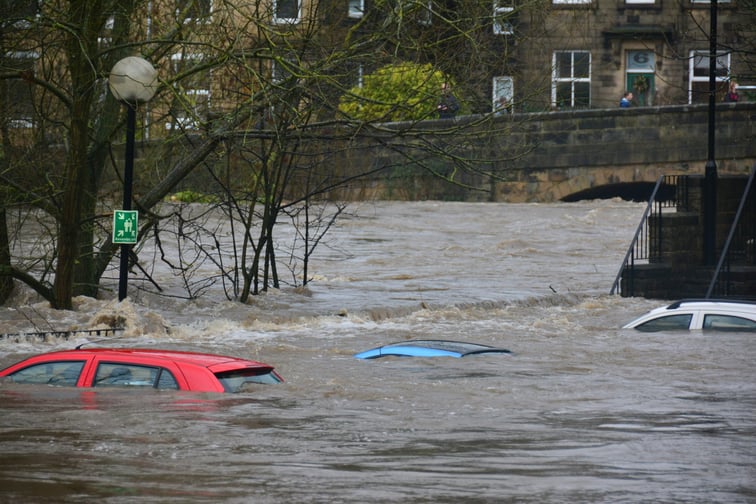
Extreme weather events have led to more than $1.8 billion in insured losses across Australia during the first six months of 2025 (1H 2025), according to figures released by the Insurance Council of Australia (ICA).
Three declared catastrophes – the Mid-North Coast and Hunter floods, North Queensland flooding in February, and Ex-Tropical Cyclone Alfred – accounted for the majority of claims.
Cyclone Alfred was the most impactful, generating over 125,000 claims valued at $1.36 billion.
The North Queensland floods added $274 million in losses from more than 11,000 claims.
Meanwhile, the recent Mid-North Coast and Hunter event resulted in around $200 million in losses across 11,500 claims.
In response, insurers have conducted community engagement programs in locations including Cardwell, Ingham, and Hervey Bay.
Additional support was made available through dedicated insurance hubs in Townsville, Taree, and Port Macquarie.
These efforts aim to provide claimants with direct assistance during the recovery process.
Liam Walter, ICA’s director of mitigation and extreme weather response, said customer assistance remains a focus.
“While this damage bill isn’t as severe as first expected, we acknowledge that for many communities, recovery is still very much ongoing and there is still a long road ahead,” he said. “The ICA is also closely monitoring the weather event that’s unfolding in New South Wales and urges residents right along the coast to follow the advice of emergency services.”
The ICA is renewing its push for public sector investment in flood prevention measures.
During a media appearance in May, ICA CEO Andrew Hall addressed the specific risks faced by businesses located in flood-prone areas.
“When it comes to insurance for business, it’s different to homes. When you have a business, you opt into things, and one of the things you can opt into often is flood. And the challenge for insurers when we come to towns like Taree is that we know that the main street floods and we know that those businesses will be wrecked by flood,” he said.
He noted that in towns like Taree, where flood risk is well-known, insurers must price accordingly, which can lead to accessibility challenges for small enterprises.
Hall also highlighted the link between inflation and growing underinsurance rates, especially in the context of building and restoration expenses.
“So, we are seeing a problem emerge around under-insurance, and that is driven not only by the events, but by inflation, so over the last 3 or 4 years, building costs have gone up around about 40%. And I think people are underestimating what it really costs to rebuild or restore your property after an event happens,” he said.
Data from the ICA showed over 220,000 dwellings in eastern Australia are located in areas at risk of flooding, yet only about a quarter are currently insured for such events.
The average household income in these regions is approximately $56,000, placing constraints on residents’ ability to recover financially after disasters.
Hall said that community-level mitigation strategies – including flood levies, elevated construction, and waterproofing – should be explored, with buybacks considered in the most vulnerable locations.
“We’ve got to build up our flood defences. It’s our biggest challenge. And to do that, we’ve got to work with communities. They have to make the decision about what they want to do, whether it’s building a flood levy, waterproofing homes, raising homes. And in worst case scenarios, we may have to consider buybacks like what’s been happening in Lismore and in some of the suburbs in and around Brisbane,” he said.



