
Insurance Australia Group (IAG) has revised its financial guidance for the year ending June 30, 2025 (FY25), citing lower-than-expected costs from natural hazard events.
The insurer now projects total natural peril costs of about $1.08 billion – roughly $200 million below its initial allowance.
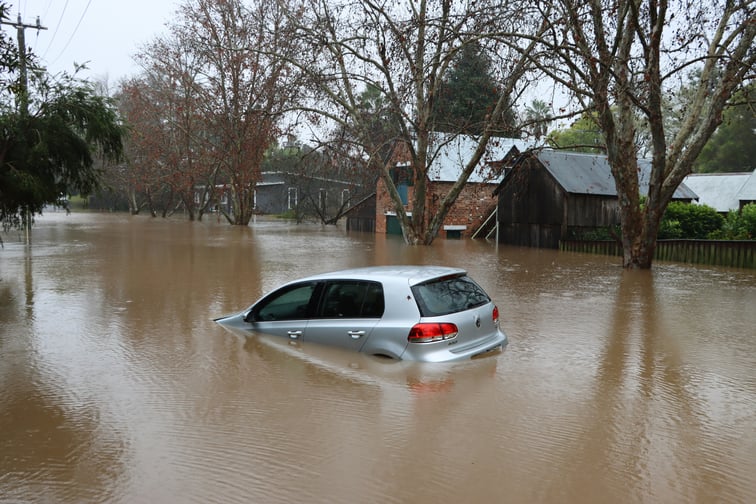
The cost estimate includes over 4,000 claims related to flooding across New South Wales’s Mid North Coast and Hunter regions in May, which are forecast to result in a net impact of approximately $100 million.
This reduction in catastrophe costs has prompted the company to raise its full-year insurance profit outlook to a range between $1.6 billion and $1.8 billion, compared to the prior range of $1.4 billion to $1.6 billion.
Correspondingly, IAG’s reported insurance margin is now expected to approach the higher end of the 15.5% to 17.5% band, an improvement from earlier projections that peaked at 15.5%.
IAG anticipates gross written premium (GWP) growth of between 4% and 4.5% for FY25. This figure accounts for various impacts including its exit from the Coles distribution partnership, currency headwinds, and multi-year premium arrangements in its workers’ compensation portfolio.
The insurer noted that its Retail Insurance Australia division has recorded around 8% GWP growth in direct lines, supported by customer retention and policy volume growth.
In contrast, conditions remain less favourable in IAG’s New Zealand commercial segment. The group expects flat GWP growth in Australian dollar terms, although local currency growth is forecast at approximately 1%.
Final FY25 results are scheduled for release on Aug. 13, subject to audit completion and board sign-off.
The updated financial guidance follows a public address by IAG CEO Nick Hawkins at the AFR Insurance Forum on June 24, where he highlighted the growing pressure from weather-related losses.
Hawkins stressed the need for coordinated action across the insurance sector, government agencies, and communities to address rising exposure to natural hazards.
“Since 2015, the frequency of extreme weather events such as floods, storms, and bushfires in Australia has doubled. A trend bringing significant challenges to people and communities – both physically and psychologically – as well as threats to critical infrastructure,” he said.



