
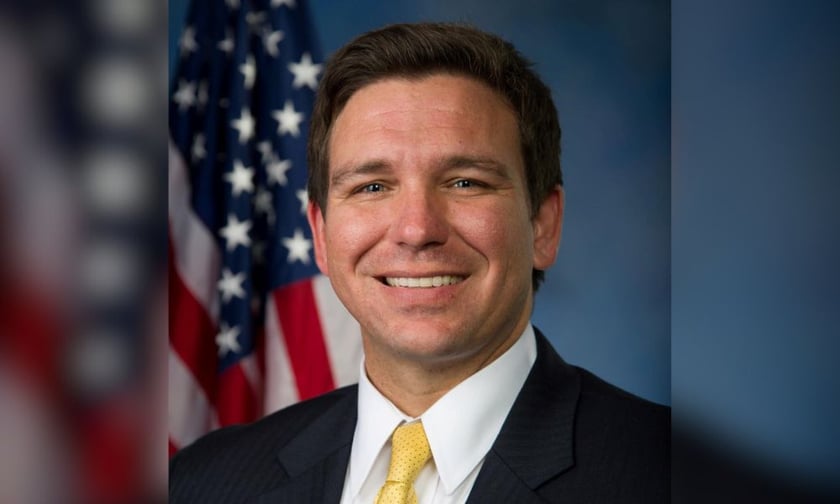
Florida Gov. Ron DeSantis has signed a bill reducing Reinsurance to Assist Policyholders (RAP) program funding by $1.1 billion and repealing the Florida Optional Reinsurance Assistance (FORA) program, signaling a shift away from state-backed reinsurance support for carriers.
House Bill 5013, enacted July 3, cuts the RAP program’s funding from $2 billion to $900 million. The program was introduced in 2022 to reimburse insurers for hurricane-related losses and was financed with taxpayer funds to boost capacity for the Florida Hurricane Catastrophe Fund. In exchange for reimbursement, insurers participating in RAP agreed to reduce rates.
According to the bill’s analysis, actual disbursements from RAP have not reached the initial funding levels. Between 2022 and 2023, three events qualified under the program, but only Hurricane Ian in 2022 met the threshold to trigger reimbursements.
Following Hurricane Ian, $800 million was transferred into RAP. As of Dec. 31, 2024, 48 insurers had received a combined $740.6 million for losses from that storm. The State Board of Administration (SBA) estimated that 50 companies would qualify for the full payout, though the total reimbursement would still remain under $860 million.
Hurricane Nicole, which also struck in 2022, did not result in RAP disbursements. In 2023, Hurricane Idalia led to a $15 million fund transfer, and two insurers received a combined $5.5 million in reimbursements as of the end of 2024.
The new law also repeals statutory provisions for the FORA program. FORA was created during a special legislative session in December 2022 and was allocated up to $1 billion in general revenue to offer additional reinsurance support.
Although the repeal is now formalized, the SBA stated that the program effectively concluded in 2023. FORA was designed as a one-year initiative and operated during the 2023 hurricane season.
Only five insurers participated, and no losses surpassed the carriers’ retention thresholds. All participating companies later terminated their contracts, and the program carried no further liabilities.
With the state scaling back its reinsurance support, analysts note that some insurers may turn to the private reinsurance market to fill the gap in catastrophe coverage. This shift could lead to higher reinsurance premiums, as private market rates have increased significantly in recent years.
Meanwhile, regulatory scrutiny of insurer financial practices has intensified in Florida amid concerns about the use of affiliated companies to shift funds away from primary carriers. Investigations have raised questions about transparency and accountability, prompting some lawmakers and industry groups to call for expanded oversight by the Office of Insurance Regulation.
What are your thoughts on this story? Please feel free to share your comments below.



