
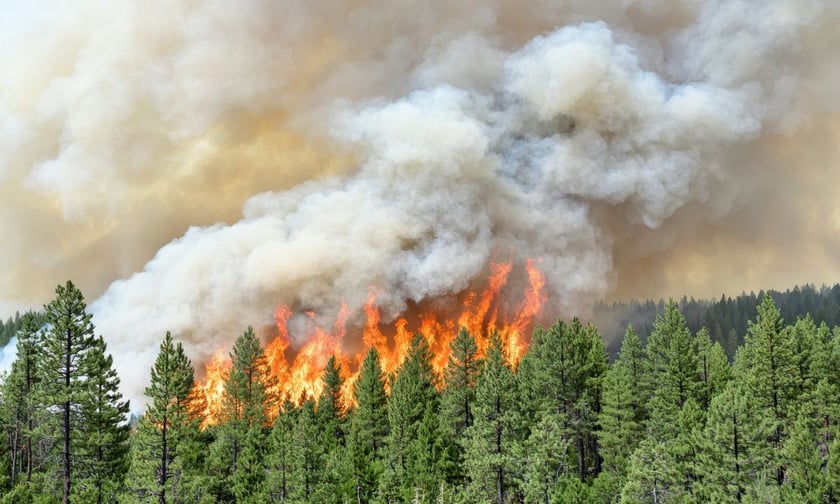
As Canadian wildfires continue to affect air quality across parts of the US, including Minnesota and Wisconsin, US lawmakers are seeking clarity on how Canadian officials are managing the growing wildfire threat, according to a report from media outlet KSTP.
While the immediate concerns focus on public health, broader implications for property risk and insurance are also coming into sharper focus.
Wildfire smoke drifting across the border has led six members of Congress to write to Canadian authorities, raising concerns about air quality and asking what measures are being taken to reduce the impact of the fires.
“Our constituents have been limited in their ability to go outside and safely breathe due to the dangerous air quality the wildfire smoke has created,” the lawmakers wrote.
According to the report, the situation underscores growing challenges for insurers on both sides of the border. With Canada currently in the midst of its second-largest wildfire season on record, risk exposure for residential and commercial properties has increased significantly. In provinces such as Manitoba, which declared a state of emergency earlier this week, insurers face growing claims pressures tied to evacuation costs, property damage and business interruption.
Manitoba Premier Wab Kinew addressed the letter from US lawmakers, stating that the focus should remain on managing the active fire season.
“This is what turns people off from politics, is when you’ve got a group of Congress people, trying to trivialize and make hay out of a wildfire season where we’ve lost lives in our province,” he said.
According to Alexandria Jones of the Canadian Interagency Forest Fire Centre, fire seasons in Canada are starting earlier and lasting longer. This trend complicates long-term underwriting strategies and poses growing challenges for insurers in assessing and pricing wildfire risk.
Insurance experts note that risk modelling must now account not only for fire loss but for broader exposure, including smoke damage to homes and vehicles, health impacts, and cross-border liability issues.
Dr. Mike Flannigan, a professor of Emergency Management and Fire Science at Thompson Rivers University, said fire suppression strategies differ across jurisdictions in Canada. “Some places they allow fires to burn, when they are not threatening communities or critical infrastructure,” he said.
Flannigan said dry conditions, lightning, and wind are contributing to more intense fires that are often difficult to control. The increasing severity of these events places added strain on insurers as they try to adapt coverage, exclusions, and pricing to match the evolving risk environment.
While insurers continue to assess the impact of the 2024 and 2025 wildfire seasons, the ongoing events are adding to longer-term conversations about climate risk, mitigation strategies, and potential changes to how coverage is structured in high-risk zones.





