
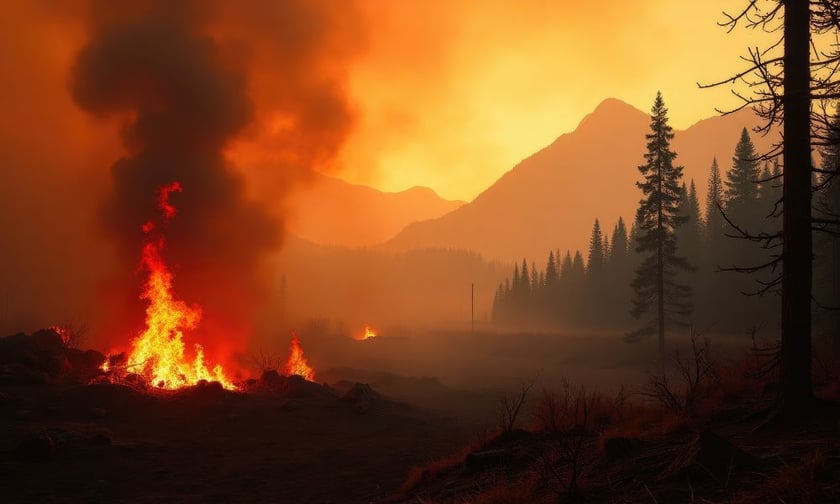
With the first anniversary of the Jasper wildfire approaching, Canadian insurers are renewing calls for the federal government to lead a coordinated national strategy for managing large-scale natural disasters.
The wildfire, which tore through Jasper, Alberta, on July 22, 2024, destroyed 358 properties and caused an estimated $1.2 billion in insured damage. One year on, many residents remain in limbo as delays continue to hamper construction efforts.
The Insurance Bureau of Canada (IBC) is urging Ottawa to work with provinces and territories to address growing challenges in disaster recovery, warning that without national coordination, recovery efforts will continue to face avoidable setbacks.
“Over the past year, the people of Jasper have shown tremendous resilience, and insurers will continue to be there every step of the way to support recovery efforts,” said Aaron Sutherland, vice-president, Pacific and Western, at IBC. “Following large-scale disasters, insurers’ priority is to rebuild and repair property as quickly as possible so their customers can return to their usual lives.”
Reconstruction in Jasper has been complicated by its location within a national park. Federal soil remediation and environmental requirements introduced after the fire have added time, cost and regulatory hurdles, which are expenses that fall outside most standard property insurance policies.
IBC said it has been working with the federal government, including Parks Canada, to address these challenges. The federal government has committed to covering the added remediation costs and expediting the approval process to prevent further delays. Still, progress remains slow. As of early July, only 56 of the 358 properties lost to the fire had received the permits required to begin rebuilding.
By comparison, reconstruction in Fort McMurray after the 2016 wildfire was already underway by the one-year mark. Insurers are warning that delays like those seen in Jasper are becoming more common following catastrophic events, and could leave policyholders without sufficient coverage as timelines stretch. Some residents are now nearing the end of their Additional Living Expenses coverage, while businesses may be exhausting Business Interruption insurance.
Craig Stewart, IBC’s vice-president of Climate Change and Federal Issues, said Canada lacks the infrastructure to manage post-disaster recovery efficiently and called on Ottawa to establish a dedicated federal coordinating agency.
“Delays that prolong the rebuilding process, like we are seeing in Jasper, are occurring more frequently in Canada after large catastrophic events,” said Stewart.
“Canada needs a federal coordinating agency to guide emergency preparedness and recovery so that Parks Canada, and other jurisdictions, don’t have to create unique playbooks after each catastrophic event. Every other G7 country has an agency operating in this capacity—it’s time for Canada to follow suit and take on a proactive approach to emergency management.”
Beyond the immediate recovery, IBC is also calling for broader reforms, including more support for wildfire risk reduction measures such as FireSmart’s Community Wildfire Protection Plans, restrictions on new development in high-risk areas, stronger building codes requiring fire-resistant materials, and improved wildfire response capacity.
Initial insured loss estimates from Catastrophe Indices and Quantification Inc. (CatIQ) place the Jasper wildfire at $1.2 billion. A one-year update is expected later this month.





