
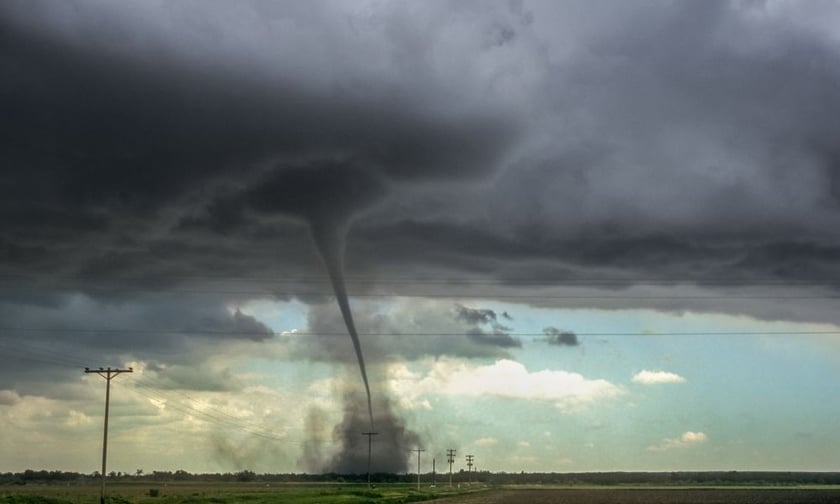
The EF-2 tornado that touched down near Lodgepole, Alberta, on July 2, not only left behind structural damage and debris but also underscored the insurance challenges faced by rural residents when responding to sudden weather events.
The storm, which recorded wind speeds of up to 190 km/h, was the first EF-2 tornado reported in Canada this year and the fourth confirmed in Alberta in 2025, according to The Weather Network. It remained on the ground for roughly 15 minutes, carving a path of damage estimated at three to four kilometers in length.
While no injuries were reported, property owners in the area are now left to assess the financial impact, some without immediately turning to insurance.
Laina Wentland, whose leased pastureland was directly in the tornado’s path, said her family did not wait to file a claim before beginning repairs. “It probably took out a mile-and-a-half or two miles of fence,” she told the Canadian Press. With 32 cow-calf pairs in the affected field, the focus was on containment, not paperwork. “We didn’t even stop to figure out if insurance covered it.”
Instead, Wentland’s family brought in equipment to clear debris, including sections blocking nearby roads, and immediately began rebuilding the fence. While she acknowledged that there may be support available through coverage or disaster assistance, the urgency of protecting livestock and restoring access took priority.
This response highlights a common issue in rural areas, where property owners facing weather-related losses may not always have time to navigate insurance claims before addressing immediate operational concerns.
The tornado also raised questions about the limits and scope of standard farm and property insurance policies in Alberta. Coverage for wind-related damage varies depending on the provider and policy type and not all losses are automatically included. Deductibles, exclusions and eligibility for government disaster relief may further influence how and when residents seek financial recovery.
New data from the Insurance Bureau of Canada shows that severe weather is contributing to higher claim volumes and rising costs across the country. While Alberta has long been a hotspot for weather-related insurance losses, events like the Lodgepole tornado serve as a reminder of the need for updated policies, emergency planning, and awareness of what is and isn’t covered.
With more frequent and intense weather events predicted in parts of the country, insurers and policymakers may face pressure to address gaps in rural coverage and response capacity. For property owners like Wentland, however, the immediate concern remains clear: securing livestock, clearing debris, and restoring essential infrastructure.





