
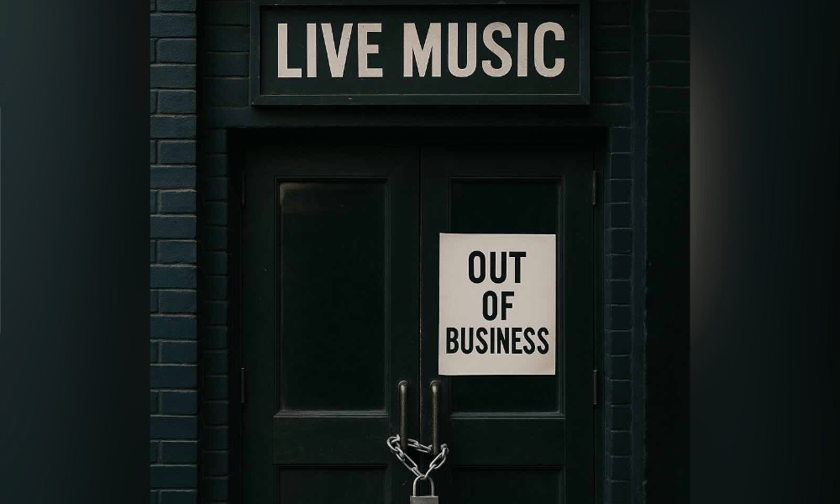
Nestled in the foothills of Melbourne’s Dandenong Ranges, a much-loved live music venue is being forced to pass a new cost on to patrons - not to cover artist fees or rising power bills, but to cope with the soaring burden of insurance premiums inflated by government taxes.
Sooki Lounge, a 330-capacity venue known for championing local acts and touring talent, will soon apply a $1 per ticket "public liability levy" - a desperate move co-owners Stephen Crombie and Suzana Pozvek say is the only way to stay afloat as insurance costs skyrocket.
At first glance, it might seem like another knock-on effect of a tight post-pandemic economy. But dig deeper, and a more frustrating truth emerges: tens of thousands of dollars in mandatory charges - including GST and stamp duty - are embedded within the insurance premium itself, making recovery nearly impossible for small operators.
“Five thousand dollars in GST, five thousand in stamp duty,” Crombie told The Sydney Morning Herald. “That's 10 grand straight to government before we even talk about actual coverage.”
Once paying a manageable $15,000 annually for public liability cover, Sooki Lounge’s premium has now exploded to over $60,000 - and climbs to $65,000 once financing costs are factored in. This is despite the venue’s spotless 11-year record with no claims.
Public liability insurance, which protects businesses from lawsuits related to injury or property damage, has become a flashpoint for Australia’s struggling live music scene. What’s less visible is the impact of the taxes quietly tacked onto these policies.
Stamp duty on insurance is a state-based charge and can vary significantly depending on the type of cover and location. GST, a federal tax, adds a further 10%. Combined, they can add up to 30% to an already bloated premium.
The upshot? Independent venues like Sooki are subsidising the tax take - while competing against publicly owned facilities, such as council-run arts centres, that benefit from government-backed insurance schemes with dramatically lower costs.
“It’s a rigged game,” Crombie says. “We’re losing artists to venues who can undercut us simply because their insurance is subsidised.”
Crombie’s calls for help have gone unanswered. Letters have been sent to state MPs, federal representatives, music advocacy groups and cultural bodies - all in vain. The issue has even been raised in parliamentary inquiries into live music, but no meaningful reform has followed.
And while the federal government has offered symbolic support for the arts, operators say they need hard policy changes, not photo ops.
“Anthony Albanese might spin records at the Corner Hotel, but that doesn’t help when we’re drowning under $65,000 bills,” Crombie says.
Indeed, despite persistent lobbying from both industry groups and insurance giants like QBE, which recently decried insurance taxes as excessive and counterproductive, there has been little appetite from state treasuries to relinquish the lucrative revenue stream.
While government-backed reinsurance pools have helped larger insurers weather climate-related catastrophes, there is no such buffer for small cultural venues.
“It's simply not sustainable,” Crombie warns. “Venues under 500 capacity are going to disappear - not because the music isn’t good, not because people don’t want to go out, but because no one can afford to keep the lights on with this level of cost.”
He estimates the $1 ticket levy will generate around $20,000 annually - enough to reduce the immediate burden, but not enough to cover the full premium. Still, it’s a start.
“We’re not looking to make a profit here. We just want to survive.”
Sooki Lounge is also pledging transparency: the venue will post monthly updates showing exactly how the levy is used, and ticketing partner Oztix has agreed to forgo any cut of the surcharge.
The stakes are high. According to a 2023 industry report, nearly 1,300 venues stopped hosting live music in the years following the pandemic - one in four across the country.
The exodus has likely continued, with anecdotal reports of venues quietly shuttering or operating without insurance, risking massive liabilities just to stay open.
For artists, it’s a crisis too. With fewer places to perform, original live music is giving way to safer, more profitable alternatives like cover bands, daytime community markets, or simply silence.
“We’re already seeing it,” Crombie says. “If this keeps up, young musicians won’t have anywhere to play. And if they can’t play, they won’t stay in music.”
Until governments reckon with the unintended consequences of their tax policies - and consider reforms such as underwriting insurance or exempting cultural venues from punitive levies — the live music sector’s recovery will remain precarious.
For now, Sooki Lounge is hoping that patrons, armed with a clearer understanding of the crisis, will see that the extra dollar on their ticket is less about revenue - and more about survival.



