
In a sharply worded public intervention, two of the world’s most prominent insurance executives - Evan Greenberg, chief executive of Chubb, and John Doyle, chief executive of Marsh McLennan - have issued a joint warning over the ballooning influence of third-party litigation funders in the United States. Writing in The Wall Street Journal, the pair characterised the practice as a parasitic force driving jury awards into the stratosphere and adding hidden costs throughout the economy.
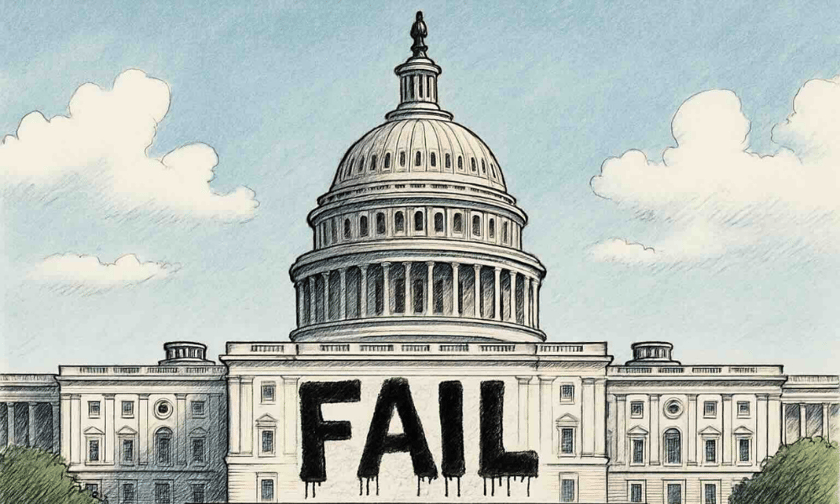
Their remarks come amid mounting frustration that attempts to curb the sector through tax reform were quietly defeated during the Trump administration’s 2020 budget process. A provision included in what was colloquially dubbed the “Big Beautiful Bill” - a sweeping fiscal package - would have imposed a 40.8% tax on returns derived from litigation finance agreements. That measure passed the House of Representatives but was struck down by the Senate Parliamentarian on procedural grounds, as it was deemed to contravene the Byrd Rule, which restricts non-budgetary policy changes within reconciliation bills.
“It was a missed opportunity,” the executives wrote, decrying the continued favourable tax treatment granted to litigation funders - some of whom pay nothing at all - while plaintiffs themselves can face federal tax rates as high as 37%.
Third-party litigation funding (TPLF) has become a booming international business, with hedge funds, private equity houses, and sovereign investors pumping billions into personal injury, class action, and commercial litigation in the hopes of lucrative returns. Greenberg and Doyle acknowledge that such funding may enable some claimants to access justice, but they argue the practice has evolved into something far more troubling: an opaque, speculative industry that warps incentives and distorts outcomes.
“Outside money has turned injury action into an investment scheme,” they noted, likening it to the mispricing of risk seen in subprime mortgages.
Their warning is borne out by the figures. According to Marathon Strategies, there were 135 jury verdicts in the US in 2024 alone that exceeded $10 million - so-called “nuclear verdicts”. Forty-nine (49) of these exceeded $100 million, and five surpassed $1 billion. The median nuclear verdict has jumped from $21 million a decade ago to $51 million today. In total, awards in 2024 surpassed $31 billion.
|
Year |
Nuclear Verdicts |
Total Awarded |
Median Award |
> $100M Verdicts |
|
2013–22 |
1,288 (cumulative) |
— |
$21 million |
115 |
|
2023 |
89 |
$14.5 billion |
$44 million |
27 |
|
2024 |
135 |
$31.3 billion |
$51 million |
49 (5 over $1bn) |
The knock-on effects, argue insurers, are felt far beyond the courtroom. As settlements grow, so do premiums. Greenberg and Doyle highlight the example of standard commercial vehicle accidents in the US, where claims that once attracted $1 million verdicts now frequently exceed $10 million and occasionally surpass $100 million. That cascade of costs is passed down to logistics operators, businesses, and consumers - contributing, they argue, to broader inflationary pressures.
The US Chamber of Commerce has estimated that tort litigation functions as a $529 billion drag on the American economy - equivalent to over £3,000 per household. Meanwhile, the Insurance Information Institute and Munich Re US peg the average litigation burden at more than £5,000 annually for a family of four, growing at a rate of 7% per year.
Though the Trump-era tax reforms fell away in Congress, insurers have begun to take matters into their own hands. Chubb has launched internal reviews to examine whether its commercial partners are indirectly fuelling the litigation funding ecosystem. Marsh McLennan has for several years refused to offer litigation insurance products linked to third-party financiers.
But both firms agree that voluntary restraint will not be sufficient. They are calling for renewed legislative action - at both state and federal levels - focused on tax parity, transparency in court filings, and better disclosure of financial interests in litigation outcomes.
As traditional insurers retreat from the most volatile classes of business - particularly in medical malpractice - excess and surplus (E&S) carriers have moved in. These underwriters, who operate outside standard rate-filing regimes, are leveraging real-time analytics to underwrite emerging risks more nimbly. However, they too are finding it increasingly difficult to keep pace with the litigation landscape.
“Social inflation is changing the game,” said Michael Walder, head of healthcare programmes at Nationwide. “Even the most sophisticated pricing models are being challenged.”
In 2023, 57 healthcare-related verdicts exceeded $10 million in the US, compared to just six a decade prior. Analysts expect that number to remain elevated through 2025.
There is also a growing consensus among legal experts that the insurance industry must rethink its approach in the courtroom. Robert Tyson, a veteran trial lawyer and author of Nuclear Verdicts, believes insurers are routinely outmanoeuvred by plaintiff counsel.
Rather than contesting damages in the abstract, he urges defence lawyers to personalise their clients - corporates included - accept responsibility where appropriate, and offer early damage anchors to frame jury expectations. Most importantly, he says, they must actively address the subjective realm of pain and suffering, which often drives the most exaggerated awards.
“You have to humanise the company,” Tyson said. “Most nuclear verdicts are against faceless defendants.”
While the United States remains an outlier in terms of jury awards, the underlying structural issues are increasingly familiar to insurers and reinsurers worldwide: litigation funding, legal advertising, rising claim costs, and the erosion of traditional defences. European and UK insurers - particularly those exposed to North American risk through casualty reinsurance or multinational accounts - are watching closely.
Greenberg and Doyle’s message, though aimed squarely at Washington, resonates more broadly across the globe - don’t let litigation funders and nuclear verdicts drive up premium costs for all your clients.



